Europe’s New Airport Entry System — Here’s What You ACTUALLY Need To Know Before You Fly
What Is EES?
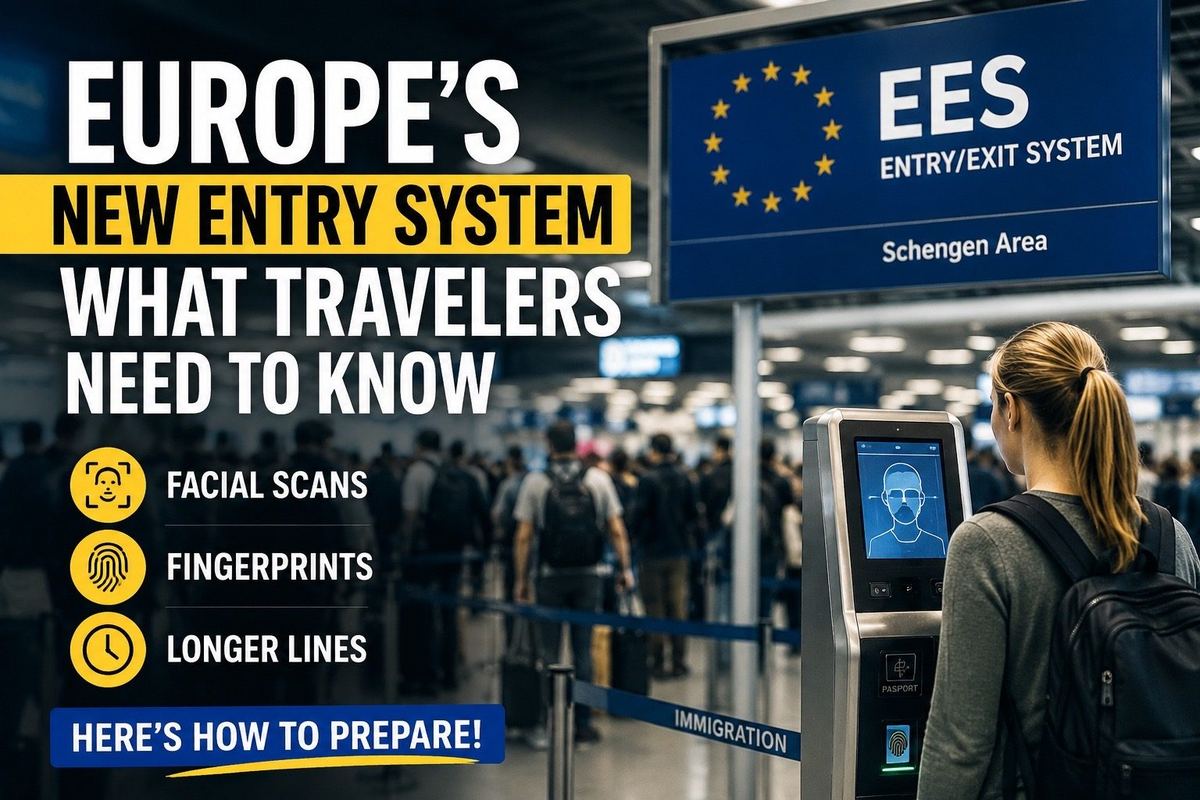
Europe is rolling out a new border control system called EES — the Entry/Exit System. It replaces the old passport-stamp system for non-European travelers entering the Schengen Area.
Under EES, instead of just handing your passport to an officer and getting a stamp, you may now:
- Have your passport scanned
- Take a facial photo
- Provide fingerprints
- Have your entry digitally recorded in the system
This is already beginning to roll out across European airports. And honestly? I think some of those airports are going to be an ABSOLUTE MESS this summer during peak travel periods. I’ll get to that in a minute.
EES vs. ETIAS — This Is Where Everyone Gets Confused
Here’s the thing that is causing mass confusion online right now — there are TWO separate European travel systems, and people keep mixing them up.
EES is the NEW biometric entry system being rolled out at airports NOW. For most travelers, you do NOT fill anything out online beforehand. The registration happens when you arrive at immigration in Europe. That’s it.
ETIAS — now THIS is the one everyone keeps hearing about. ETIAS is a future online travel authorization system — similar to how ESTA works for people entering the United States. Americans, Canadians, Brazilians, Brits, and other nationalities will eventually need to complete an online approval BEFORE flying to Europe.
But as of right now — ETIAS is NOT fully operational yet.
So if you’re traveling soon and you’ve been frantically searching for some mysterious application form you’re supposed to fill out, relax. You’re not missing something. Most travelers right now only deal with the biometric screening when they land.
Honestly, European officials could have done a MUCH better job explaining the difference between these two systems. The confusion is totally understandable — and totally their fault.
Why I Think Summer Travel Could Get Ugly
Here’s my concern, and I want you to hear me out on this.
European airports already struggle during peak summer season. If you’ve ever stood in the immigration line in Lisbon, or Paris CDG, or Rome Fiumicino in July — you already know what I’m talking about. Long lines are common even WITHOUT any extra biometric processing.
Now add:
- Fingerprint collection for millions of new travelers
- Facial scanning technology
- Brand new equipment and processes
- Confused passengers who’ve never done this before
- Overwhelmed airport staff trying to manage the chaos
…and things can spiral very, VERY quickly.
If you travel as much as I do, you already know airports only need ONE small hiccup before everything turns into a domino effect of delays. I’ve seen it happen at the best airports in the world. This summer, I expect to see it happen a lot.
How to Actually Prepare Before Your Trip
Okay, enough doom and gloom. Here’s the part that actually matters — what YOU can do to make sure you’re not the one standing there looking confused while everyone behind you loses their mind.
1. Make Sure Your Passport Is ACTUALLY Valid
Most European countries require your passport to remain valid for at least 3 months beyond your planned departure date. Not your arrival date — your DEPARTURE date. Don’t assume you’re fine just because the expiration is still technically in the future. Double-check this before you ever book a ticket.
2. Do NOT Book a Tight Connection Through a Major European Hub
Please, I am begging you — do not book that 55-minute connection through Paris or Amsterdam this summer thinking you’ll be fine. You won’t be fine. You will be sprinting through an airport, and you will miss your flight, and it will be awful.
I’d rather spend an extra hour killing time at an airport café than miss a flight. Every. Single. Time. I’ve written before about how to find the best airfare deals without setting yourself up for disaster — building in connection time is part of that strategy.
3. Have Your Documents Ready BEFORE You Get to the Immigration Officer
This one should be obvious, but based on what I observe at airports around the world, apparently it needs to be said. Do NOT wait until you’re standing in front of the officer to start digging through your backpack.
Before you even get in line, have:
- Passport in hand
- Boarding pass accessible
- Hotel confirmation or address available
- Return flight details handy
You would be AMAZED how many delays are caused purely by unprepared travelers. Don’t be that person.
4. Get a Good eSIM Before You Land
This is my personal recommendation regardless of EES — but it matters even more now. If you’re going through a new biometric system, you want to be connected, have your confirmation emails accessible, and not be scrambling for WiFi in an immigration hall. I use Airalo for international eSIMs and it has saved me more times than I can count. One purchase before you leave, coverage the second you land. Done.
5. Use a VPN
While we’re at it — anytime you’re traveling internationally and connecting to airport WiFi, hotel WiFi, or any public network, please use a VPN. I use NordVPN and have for years. Your personal data is too valuable to leave unprotected.
6. Expect the Fingerprints and Facial Scans — Don’t Freak Out
If airport staff direct you toward kiosks or scanners, just go. That’s the process now under EES. It’s not optional, it’s not an arrest, and freaking out about it in line just slows everyone else down. Know it’s coming, walk up calmly, and get through it.
My Take
Look — I understand WHY Europe wants to modernize border security. I get it. Tracking who enters and exits the Schengen Area is a legitimate security concern, and digital records are smarter than ink stamps.
But governments also have a long history of taking relatively simple processes and making them dramatically more complicated before they ever get better. And the rollout communication on this has been genuinely terrible.
I’ve been through enough international border changes — COVID testing requirements, new entry forms, country-specific registration systems — to know that the TRANSITION period is always the ugly part. Remember when the US rolled out those new customs kiosks? Or when certain countries started requiring pre-registration online? The first few months are always a mess.
Maybe eventually EES becomes smooth and seamless. I hope it does. But this summer, during the rollout, during peak travel season? Plan for delays. Build in extra time. And know what’s coming before you get there.
The people who are REALLY going to suffer this summer are the ones who show up clueless, with a 45-minute connection, no idea what EES is, and their passport buried at the bottom of their bag.
Don’t be that person.
Have you already traveled through a European airport since EES started rolling out? Did you notice a difference at immigration? Drop a comment below — I want to hear what’s actually happening on the ground!
Thanks for reading, and PLEASE, TRAVEL MORE!
Related Articles
- Ultimate Guide to Getting the Best Priced Airfare
- Spirit Airlines Is Dead — And Your Airfare Is About to Pay the Price
- USA Implementing New Entry Requirements for Everyone
- United and American Airlines Merger? The Death of Competition in the Skies
- Here We Go Again… The Airlines Are Raising Bag Fees — ALL of Them!